Ask how your system works. Get an answer cited to the line.
Necto Context reads your code and your Jira tickets and answers questions from them. Each answer line shows its source: the file, line range and commit, or the Jira issue key. Short headings and labels are the only lines without one. If there is no source, it says so.
Request early accessNecto Context is in early development. We are starting with a small group of teams that use Jira and GitHub.
What Necto Context is
Necto Context is a context layer for software teams that use Jira and GitHub. It reads code and tickets without changing them, stores each fact with its source and date, and answers questions only from those facts, citing a file, line range and commit, or a Jira issue key. It marks facts whose source has changed as stale and says plainly when no source exists. Necto Context is in early development. A decision board, where people record decisions with their reasons, and groomed Jira stories that AI coding tools can build from are planned.
The problem
How a system really works lives in the code and in a few people's heads. The ticket says one thing; the code does another. Someone has to stop and find out, or guess. AI coding tools make this sharper: they build fast from whatever the ticket says, and fill the gaps themselves.
How it works
Connect a repository and a Jira project.
Necto Context reads them and never writes to them. It stores each fact with where it came from and when.
Ask a question in plain words.
Each line of the answer, apart from short headings and labels, carries a numbered citation. Open one to see the exact lines of code at that commit, or the ticket field or comment it came from.
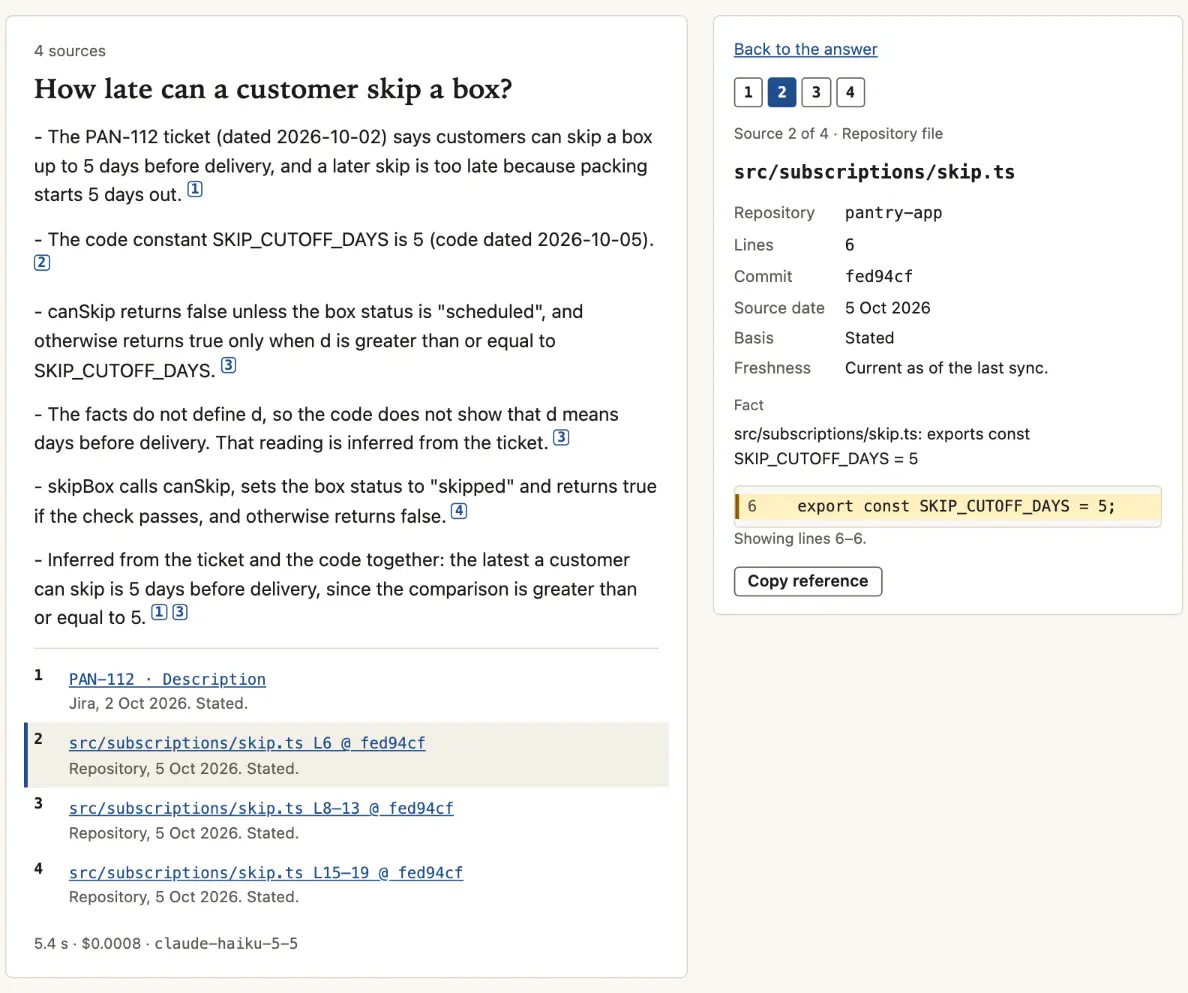
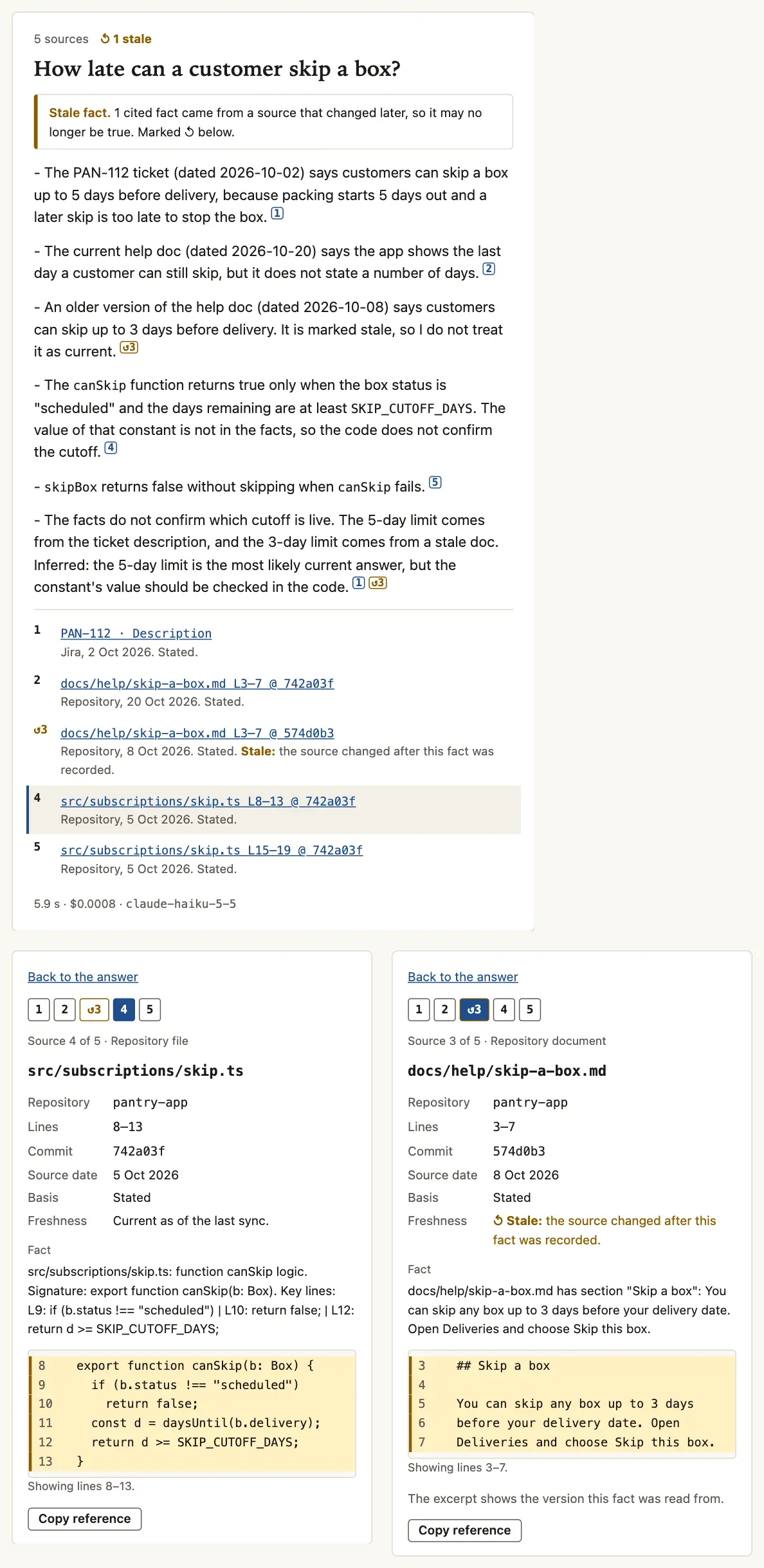
From our current build, on a made-up sample project. Captured 23 October 2026. See what is out of date or in conflict.
If a source changed after a fact was read, the fact is marked stale. If two sources disagree, you see both, each with its citation.
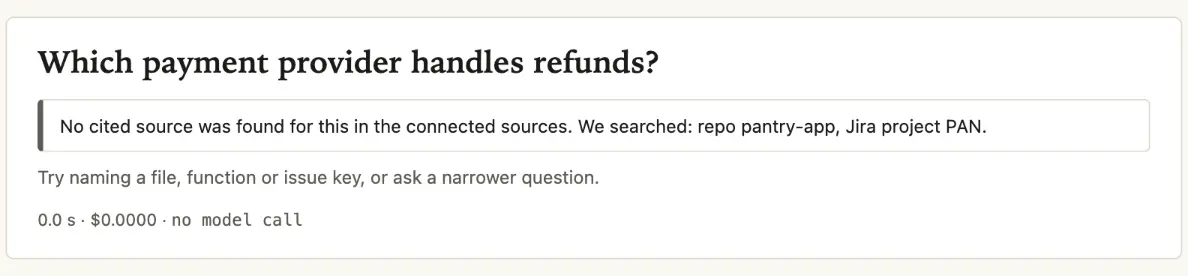
From our current build, on a made-up sample project. Captured 23 October 2026. Get a plain "no" when there is no source.
Necto Context does not fill gaps with guesses. Lines it cannot cite are removed, apart from short headings above cited lines. If no cited line is left, it says so.
From our current build, on a made-up sample project. Captured 23 October 2026.


Instructions hidden in tickets are not followed.
If a ticket or comment contains instructions aimed at the AI, Necto Context flags that text and treats it as data.

What comes next
Decisions with a record of why
Agents will draft the decision, the options and the open questions, citing the facts behind them. A person will decide and write the reason. Agents will not be able to approve anything.
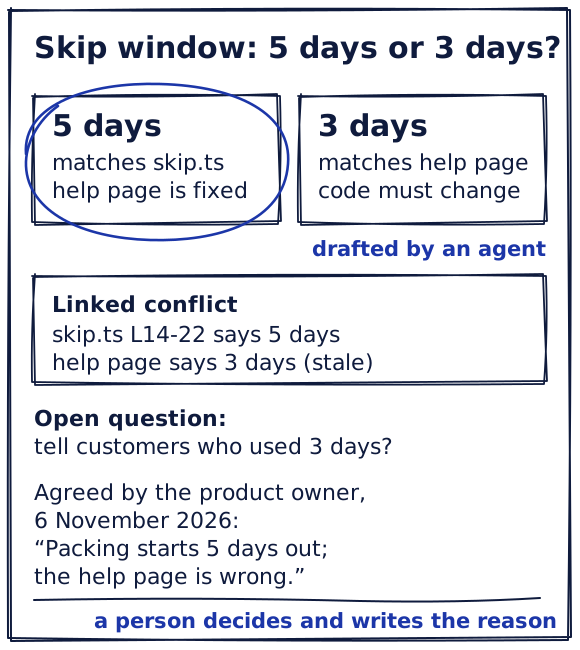
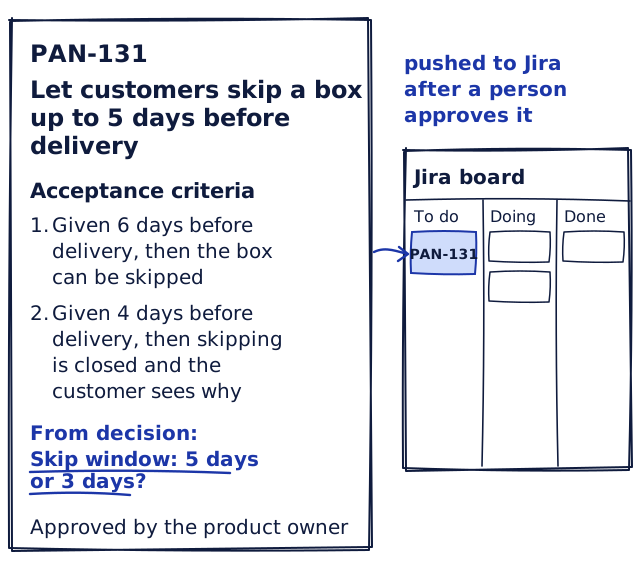
Stories AI can build from
Agreed decisions will become groomed stories with testable acceptance criteria. They will go to Jira only after a person approves them.
Results back to the decision
Pull request and test results will link back to the decision that led to them.
Today and planned
Today, in our current build
- Read-only connection to a Git repository and a Jira project.
- TypeScript, JavaScript and Markdown files read from the repository.
- Answers cited to the file, line range and commit, or to the Jira issue key with the field or comment.
- Stale facts marked, and conflicting facts shown side by side with both citations.
- Lines without a source removed from answers, apart from short headings above cited lines.
- A fixed reply when there is no source, instead of a guess.
- Instructions hidden in ticket text flagged and not followed.
Planned for the first version
- A GitHub connection for pull requests and code owners.
- Confluence documentation as a source.
- A hosted service with login.
- A code graph that shows what a change touches.
- The decision board.
- Groomed stories pushed to Jira after a person approves them.
- Questions from Jira and Slack.
- Build and test results linked back to decisions.
Our current build runs only in our own test setup, on made-up sample projects. For more detail, read the FAQ.
Request early access
Tell us where to reach you. For now, early access is open to people and companies in the United States. Arman Piric reads every request and will email you when there is a place in the first group.